
Summary (Excerpt):
Navigating date grading is vital for success in diverse markets. This guide breaks down the criteria for selecting the perfect grade, from luxury retail standards in the GCC to high-volume distribution requirements in the CIS. Learn how to balance size, skin condition, and texture to meet your specific market’s demands.
Keywords:
Date quality grading, export specifications, GCC retail standards, CIS distribution, premium vs. industrial grades.
A Guide to Date Grading: How to Choose the Right Quality for Your Market
Choosing the right grade of dates is one of the most important decisions for importers, distributors, and brand owners. It directly affects product positioning, pricing, customer satisfaction, and ultimately, brand reputation. While each origin and variety may use its own grading terminology, several core criteria are common across the industry.
1. Size and Uniformity
One of the first grading parameters is size. Larger and more uniform dates typically fall into higher grades because they look more attractive in retail packaging and gift boxes. For bulk buyers, consistent size also improves packing efficiency and portion control. When defining your requirements, specify whether your market prefers larger, premium-looking fruits or medium sizes that offer better price competitiveness.
2. Skin Condition and Defects
The condition of the skin is another key factor. High-grade dates have smooth, intact skins with minimal wrinkling, cracks, or separation from the flesh. Lower grades may include more surface defects, blemishes, or loose skin. For retail and premium segments, a low tolerance for visible defects is essential. For industrial use—such as date paste, syrups, or ingredient applications—slightly higher defect tolerance can be acceptable, allowing for more cost-effective sourcing.
3. Moisture and Texture
Different markets have different preferences: some favor soft and juicy dates; others prefer semi-dry varieties with longer shelf life. Moisture levels are carefully controlled during grading to ensure consistency within each lot. High moisture dates require a stronger cold chain and shorter shelf life, while semi-dry dates like Piarom offer better stability during transport and storage. Always align moisture profile with your logistics capabilities and end-consumer expectations.
4. Foreign Matter and Cleanliness
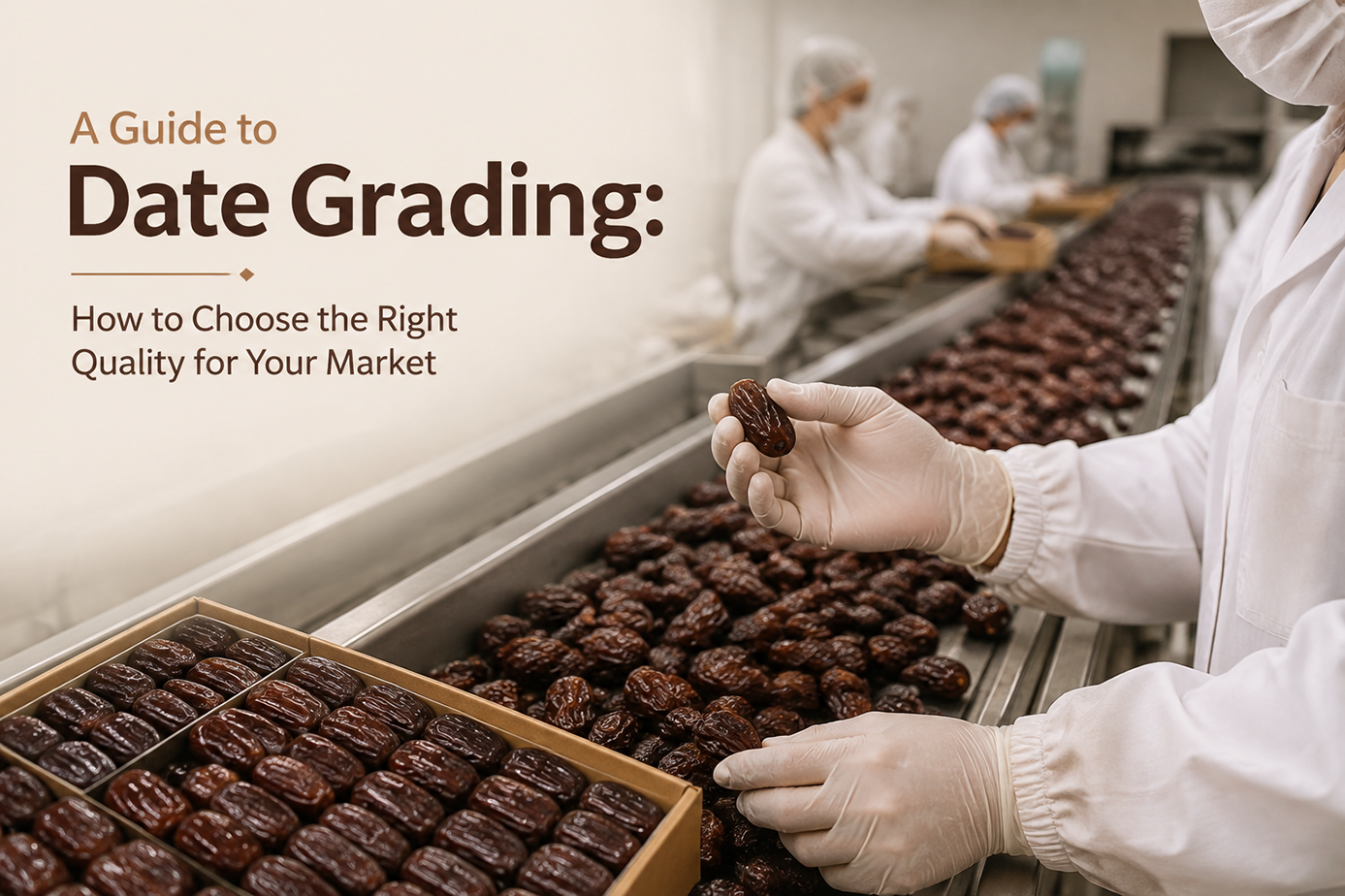
Food safety and cleanliness are non-negotiable. Higher grades undergo more thorough cleaning and sorting to minimize stems, pits, and foreign particles. Many buyers request additional steps such as metal detection or optical sorting. When choosing a grade, consider not only visual quality but also the level of processing and inspection that your customers require.
5. Packaging and Presentation
Grading does not end with the raw fruit; packaging is part of the overall quality perception. Premium grades are often paired with stronger, more attractive packaging suitable for retail shelves and gifting. Lower grades may be supplied in bulk cartons for industrial or wholesale use. Deciding between bulk, food-service, or retail-ready packaging is a critical part of defining your quality level.
How Mangrove Supports Your Grading Decisions
At Mangrove, we help buyers translate market needs into clear grading specifications. By offering custom sorting and tailored grading options, we ensure that each shipment matches the target segment—whether it is high-end retail, mainstream supermarket, or industrial processing. Our focus on transparency, detailed specifications, and pre-shipment inspections allows our partners to choose the right quality with confidence.


